Reference · posted 04 Sep 2026
Carbon browns: the twelve materials worth knowing by number
Cardboard is not leaves is not sawdust. The C:N spread across common browns runs from 45 to 500, and the moisture spread from 5 % to 40 % — picking the wrong brown is how a well-planned pile ends up at 60:1.
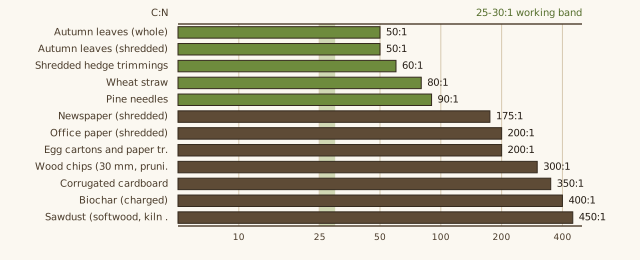
01Ratios at a glance
02The table
| # | material | C:N | water | N % | dose |
|---|---|---|---|---|---|
| 01 | Autumn leaves (whole)Mat into a water-repellent layer if piled whole; shred with a mower for hot piles. | 50:1 | 25% | 0.90 | 2 parts leaves to 1 part greens by volume for a balanced pile. |
| 02 | Autumn leaves (shredded)Shredded leaves absorb 3 times their weight in water; weigh before adding water. | 50:1 | 30% | 0.90 | Same ratio as whole leaves, but finishes 3-4 weeks faster. |
| 03 | Shredded hedge trimmingsChip on the day of cutting; a week in a heap turns it mouldy and slimy. | 60:1 | 32% | 0.70 | Up to 25 % of volume in a hot pile; more than that slows it noticeably. |
| 04 | Wheat strawThe slowest common brown. Needs a full heating cycle before the stems break down. | 80:1 | 14% | 0.60 | Up to one third of pile volume; chop to 8 cm or it mats. |
| 05 | Pine needlesDoes not acidify finished compost; the pH myth comes from measuring fresh needles. | 90:1 | 18% | 0.50 | Keep below one third of pile volume or the batch takes five months. |
| 06 | Newspaper (shredded)Soy-based newsprint inks are safe; avoid glossy inserts and magazines. | 175:1 | 8% | 0.20 | 1 kg per 3 kg of wet greens; excellent for absorbing excess moisture. |
| 07 | Office paper (shredded)Fines quickly and can mat; mix thoroughly rather than layering. | 200:1 | 7% | 0.20 | 1 kg per 3 kg of greens; keep staples and thermal receipts out. |
| 08 | Egg cartons and paper traysCompressed pulp trays absorb water quickly and do not mat. | 200:1 | 9% | 0.20 | Tear to 5 cm; a good light brown for a wet kitchen-scrap pile. |
| 09 | Wood chips (30 mm, prunings)Expect 8-12 months to break down; only worth it as the brown fraction of a hot pile. | 300:1 | 20% | 0.20 | Better as mulch than as compost; if used in a pile keep below 20 % of volume. |
| 10 | Corrugated cardboardRemove tape, staples and glossy labels. Soak 30 minutes before use or it will not wet inside a pile. | 350:1 | 8% | 0.10 | Use as the backbone brown; 1 kg per 1.5 kg of wet kitchen waste. |
| 11 | Biochar (charged)Uncharged biochar adsorbs nutrients rather than releasing them; it is a habitat, not a feed. | 400:1 | 40% | 0.00 | Maximum 5 % of pile volume, and only if charged with compost or urine first. |
| 12 | Sawdust (softwood, kiln dried)Forms water-repellent pockets if added dry and unmixed; pre-mix with wet greens. | 450:1 | 10% | 0.10 | Maximum 10 % of volume — it is far stronger carbon than it looks. |
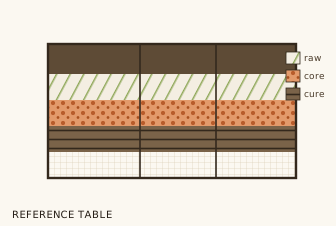
Nothing in the table is built on its own: this is where each class of material ends up once a bin is charged from it.
03How to use this table
- 01 Weigh the brown you have rather than estimating it by volume the first few times.
- 02 Look up its C:N in the table above and multiply by the weight to get effective carbon.
- 03 Decide the target ratio: 25-30:1 for a hot pile, 35-40:1 for a slow one.
- 04 Calculate the greens needed using the nitrogen column, not by eye.
- 05 Soak cardboard, pre-mix sawdust with wet greens, and chop straw before they go in.
- 06 Check the moisture arithmetic separately — browns are drier than they feel.
- 07 Record the actual weights in a log so the next batch does not repeat the error.
04The spread is wider than most people expect
Browns are usually spoken of as one thing, but the C:N range across this table runs from 50 for leaves to 450 for sawdust — a factor of nine. At 450:1, 10 kg of sawdust contributes 45 kg of effective carbon equivalent and almost no nitrogen at all, which is enough to stall a 100 kg batch outright. At 50:1, 10 kg of leaves behaves almost like a mild green. Knowing which brown you have matters more than knowing the ratio of the pile you planned.
05Moisture decides the work, C:N decides the outcome
Dry browns at 7-14 % moisture are the reason most first batches are too dry. A pile that looks damp and feels damp with a 25 % leaf fraction can still be at 35 % overall when the target is 55 %. Weigh the browns and calculate: 10 kg of cardboard at 8 % contributes 0.8 kg of water, and needs about 5 kg of water added to reach the moisture it should have. There is no way to recover this after the pile is built except by turning and watering, which costs a week of heat.
06Two browns are not interchangeable at all
Biochar and wood chips look similar and behave in opposite ways. Biochar is a habitat: it holds nutrients and microorganisms in its pore structure, and it stays in the soil for centuries. Wood chips are a food: they are consumed over months and disappear. Adding 5 % charged biochar improves a pile's ability to hold nitrogen; adding 20 % wood chips simply delays the batch by a month. Read the table down the C:N column and then check the note column, because the numbers alone do not tell you which is which.
07What to do when you have only one brown
Most gardens have exactly one brown available in quantity — usually leaves in autumn and cardboard the rest of the year. That is workable: leaves alone at 50:1 will run a hot pile if the greens are 15-20:1 and the ratio is two parts brown to one part green by volume. Cardboard alone at 350:1 becomes a problem, because hitting 30:1 requires roughly 10 kg of greens for every 1 kg of cardboard, which is more kitchen waste than most households produce.
08Questions this batch raised
- Is glossy printed cardboard usable?
- The outer liner of a printed delivery box is fine — it uses water-based ink. What to remove is tape, plastic windows, staples and any laminated or waxed coating, all of which survive composting intact and then appear in your beds.
- Can I use paper with coloured ink?
- Modern coloured inks on newsprint and office paper are soy or water based and safe in compost. The exceptions are thermal receipts (bisphenol A or S), carbon paper and anything with a plastic film layer. If it tears cleanly and does not stretch, it is paper; if it stretches, it is plastic.
09Faults this batch illustrates
- The pile will not heatTemperature sits within 5 °C of ambient for a week or more. The material looks fine and does not smell.
- Pile is dry and crumblyThe material crumbles rather than clumps, the surface looks dusty, and the temperature is below 40 °C.
- Plants yellowing after compost or chip mulchPale, yellowing lower leaves and stalled growth within two to four weeks of applying wood-based compost or digging in…