What goes in
Feedstock reference tables
Four tables: carbon browns, nitrogen greens, kitchen and home waste, and garden and yard residues. Each material carries its C:N, its moisture, its nitrogen content and a dose for the material you are balancing it against.
Reference
Eighteen materials from the garden, including the four that should never go in a compost pile at all — not because they will not break down, but because they will break down into something you do…
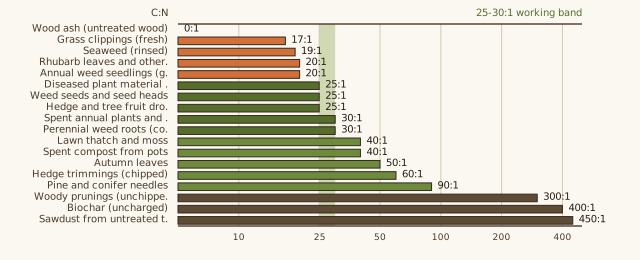
- materials
- 18
- C:N
- 0–450
- N %
- 0.0–2.4
- water
- 2–85%
15 Oct 2026
Reference
Nineteen items from the average kitchen, sorted by whether they belong in a compost pile, a worm tray, a bokashi bucket, or none of the three.
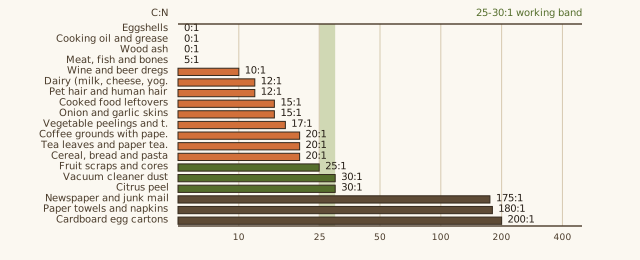
- materials
- 19
- C:N
- 0–200
- N %
- 0.0–9.0
- water
- 0–95%
01 Oct 2026
Reference
Every smell problem in this log came from the green side. Greens run from 4:1 to 24:1, they are 60-85 % water, and the strongest of them will clear a garden within a day if handled badly.
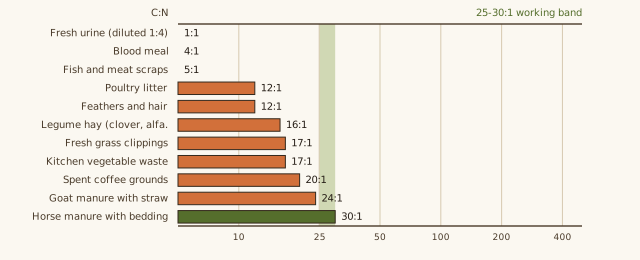
- materials
- 11
- C:N
- 1–30
- N %
- 1.1–12.0
- water
- 8–99%
16 Sep 2026
Reference
Cardboard is not leaves is not sawdust. The C:N spread across common browns runs from 45 to 500, and the moisture spread from 5 % to 40 % — picking the wrong brown is how a well-planned pile ends up…
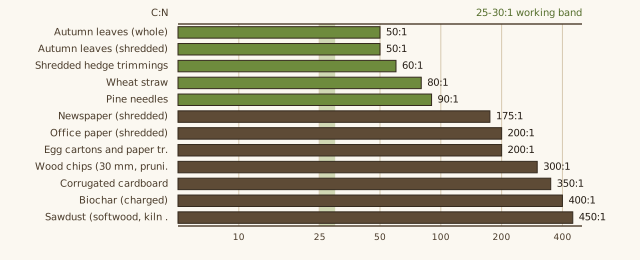
- materials
- 12
- C:N
- 50–450
- N %
- 0.0–0.9
- water
- 7–40%
04 Sep 2026
Values are typical figures from published sources, not laboratory analyses. Treat a ratio built from them as a working estimate with roughly 10 % error.