Reference · posted 15 Oct 2026
Garden and yard residues: what to compost, what to burn, what to bin
Eighteen materials from the garden, including the four that should never go in a compost pile at all — not because they will not break down, but because they will break down into something you do not want.
01Ratios at a glance
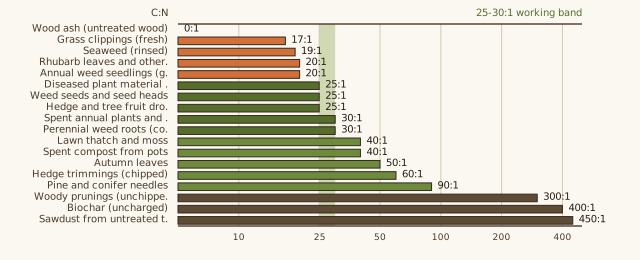
02The table
| # | material | C:N | water | N % | dose |
|---|---|---|---|---|---|
| 01 | Wood ash (untreated wood)Ban on coal ash, painted wood ash and barbecue briquette ash. | 0:1 | 2% | 0.00 | 1 kg per cubic metre maximum, dusted between layers. |
| 02 | Grass clippings (fresh)Do not compost grass from a lawn treated with clopyralid or aminopyralid. | 17:1 | 78% | 2.40 | 15 cm layers maximum, always mixed with browns. |
| 03 | Seaweed (rinsed)Excellent trace minerals; rinse to avoid salt accumulation in the compost. | 19:1 | 80% | 1.60 | Heap freely; rinse first if salt-water collected. |
| 04 | Rhubarb leaves and other toxic foliageSafe to compost, but do not eat them and do not feed large amounts to a worm tray. | 20:1 | 85% | 1.80 | Heap or bokashi; the oxalic acid breaks down in composting. |
| 05 | Annual weed seedlings (green, no seed)Pulled before they set seed, these are just another green. | 20:1 | 75% | 2.00 | Any method, including a worm tray in moderation. |
| 06 | Diseased plant material (blight, mildew)When in doubt, bin it or burn it; tomato and potato blight survives a cold pile. | 25:1 | 65% | 1.50 | Hot pile only, buried in the core, three days above 55 °C. |
| 07 | Weed seeds and seed headsMost seeds survive 12 months of cold composting; the drowning method works for pulled weeds. | 25:1 | 60% | 1.40 | Hot pile only, or drown in a bucket for two weeks first. |
| 08 | Hedge and tree fruit dropsAttracts wasps and rodents; never leave on the surface of a cold pile. | 25:1 | 80% | 1.40 | Hot pile only, buried in the core; 20 kg at a time is plenty. |
| 09 | Spent annual plants and stalksOnly put disease-free material in a cold pile; in a hot pile, 55 °C for three days. | 30:1 | 60% | 1.20 | Chop to 10 cm and mix through; ideal bulk material. |
| 10 | Perennial weed roots (couch, bindweed)A 5 cm root fragment restarts the plant; do not compost these under any method. | 30:1 | 60% | 1.20 | None — dry in the sun for a week, then bin or drown. |
| 11 | Lawn thatch and mossThatch compacts badly; break it up before adding or it forms an airless mat. | 40:1 | 35% | 1.00 | Mix through a heap; up to 20 % of volume. |
| 12 | Spent compost from potsReusing it directly risks root disease; composting at 55 °C removes the risk. | 40:1 | 40% | 0.80 | Mix through a hot pile as the brown fraction. |
| 13 | Autumn leavesKeep a separate ring for leaf mould if you have space; it is a superior product. | 50:1 | 25% | 0.90 | 2 parts leaves to 1 part greens by volume. |
| 14 | Hedge trimmings (chipped)Chip the day it is cut; it goes slimy and mouldy within a week in a heap. | 60:1 | 32% | 0.70 | Up to 25 % of a hot pile by volume. |
| 15 | Pine and conifer needlesSlow and water-repellent; mix rather than layer so the water reaches them. | 90:1 | 18% | 0.50 | Below one third of the pile volume. |
| 16 | Woody prunings (unchipped)Build a dead hedge instead — it is a wildlife habitat and needs no processing. | 300:1 | 20% | 0.20 | Cold pile only, or chip first. Whole branches take 2-3 years. |
| 17 | Biochar (uncharged)Added raw it adsorbs nutrients; charged, it improves them. | 400:1 | 5% | 0.00 | Charge it first: soak in compost extract or diluted urine for 48 hours. |
| 18 | Sawdust from untreated timberNever use sawdust from treated, painted or MDF timber — it carries binders and metals. | 450:1 | 10% | 0.10 | Maximum 10 % of volume; pre-mix with wet greens. |
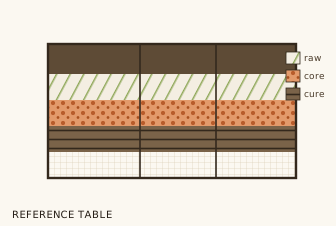
Nothing in the table is built on its own: this is where each class of material ends up once a bin is charged from it.
03How to use this table
- 01 Separate the garden waste stream into three piles: compostable, treatable, and bin.
- 02 Drown pulled weeds and seed heads in a bucket for two to three weeks before composting.
- 03 Dry perennial weed roots in the sun until they snap, then compost them.
- 04 Bin diseased foliage and anything from an aminopyralid-treated lawn.
- 05 Chip woody prunings to 30 mm or build a dead hedge instead of adding them whole.
- 06 Check that sawdust and ash come from untreated timber only.
- 07 Charge biochar in compost extract for 48 hours before it goes anywhere near the pile.
04The four materials that never go in a pile
Perennial weed roots, seed heads, diseased foliage and anything from a lawn or hayfield treated with aminopyralid or clopyralid. These four share a property that matters more than C:N: they survive the composting process in a form that causes harm afterwards. A 5 cm fragment of couch grass or bindweed root will regrow; a tomato plant with blight will infect the bed it is spread on; aminopyralid persists through composting and stunts tomatoes and legumes for two seasons.
05Drowning, drying and the alternatives to composting
Three treatments convert problem material into usable material without any risk. Drowning: submerge pulled weeds and seed heads in a bucket of water for two to three weeks, then compost the sludge and use the water diluted 1:10 as a feed. Drying: lay perennial roots on a hard surface in full sun for a week until they snap rather than bend, then compost them. Neither works on diseased foliage — that material should be binned in municipal waste.
06Chip size and the two-year pile
Unchipped woody prunings are the most common reason a garden has a pile that has been sitting for two years. Whole branches above 2 cm diameter are effectively inert in a domestic heap: the surface-to-volume ratio is too low for microbes to make progress. Chipping to 30 mm cuts the time from 24 months to 8-12. If you do not have a chipper, the better use of woody prunings is a dead hedge or a bean pole store, not a compost pile.
07Ash and biochar: both are 'carbon' and neither behaves like it
These two are the entries most often misunderstood. Ash contains no carbon at all despite being black — it is calcium, potassium and trace minerals, and its value is as a pH corrector at 1 kg per cubic metre, no more. Biochar is essentially pure carbon but is not a microbial food; its value is in pore structure for habitat. Added raw, biochar adsorbs nutrients; charged in compost extract first, it delivers them. Neither is a substitute for ordinary browns.
08Questions this batch raised
- Can I compost grass clippings from a lawn I treated with weed and feed?
- No, not for food beds. Aminopyralid and clopyralid pass through composting and through animal digestion, and they damage tomatoes, potatoes, beans and peas at very low concentrations. Keep that material out of the compost for at least two seasons, and never use manure from animals fed hay from a treated field.
- What should I do with tomato plants that had blight?
- Bin them. Late blight spores survive a domestic cold pile and can also survive a poorly managed hot pile if the material stays on the outside. Municipal green waste collection usually composts at higher, monitored temperatures. If you must compost them, bury them in the core of a pile that you can guarantee will hold 55 °C for three days.
09Faults this batch illustrates
- Weed seedlings in finished compostWeed seedlings germinating in beds dressed with compost that was cold-composted or never exceeded 55 °C.
- Disease appearing after using compostBlight, clubroot or damping-off appearing in beds that were dressed with compost containing diseased plant material.
- Twisted growth in beds dressed with compost or manureTomato, bean and pea plants with curled, cupped or fern-like new growth, and pods that are deformed or empty.