Reference · posted 01 Oct 2026
Kitchen and home waste: what goes in, what stays out
Nineteen items from the average kitchen, sorted by whether they belong in a compost pile, a worm tray, a bokashi bucket, or none of the three.
01Ratios at a glance
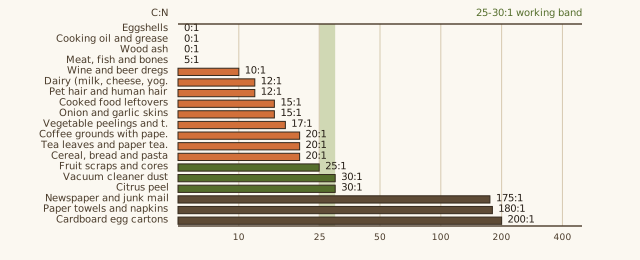
02The table
| # | material | C:N | water | N % | dose |
|---|---|---|---|---|---|
| 01 | EggshellsCoarse shells take years to break down and do nothing for pH; grind them. | 0:1 | 3% | 0.40 | All three, ground to powder. 40 g a week in a worm tray. |
| 02 | Cooking oil and greaseCoats particles and blocks water and air; a tablespoon can ruin a worm tray. | 0:1 | 0% | 0.00 | Bokashi in small amounts (soaked into paper); never in a heap or worm tray. |
| 03 | Wood ashAlkaline: raises pH and can volatilise nitrogen if overused. Untreated wood only. | 0:1 | 2% | 0.00 | Maximum 1 kg per cubic metre of pile; never in a worm tray. |
| 04 | Meat, fish and bonesAttracts animals within hours in an open heap; fine in a sealed bucket. | 5:1 | 65% | 9.00 | Bokashi only, or a hot pile buried 25 cm deep. |
| 05 | Wine and beer dregsAlcohol kills worms in quantity; a glass of dregs is fine diluted through bedding. | 10:1 | 95% | 1.00 | All three in small quantities; pour onto browns, not onto worms. |
| 06 | Dairy (milk, cheese, yogurt)Rancid dairy is one of the worst smells in a worm tray — keep it out entirely. | 12:1 | 80% | 3.00 | Bokashi only. Small amounts in a very hot heap are acceptable. |
| 07 | Pet hair and human hairHigh nitrogen but slow; spreads through a pile unevenly if added in clumps. | 12:1 | 12% | 4.00 | Heap or worm tray, chopped and mixed. Up to 3 % of pile volume. |
| 08 | Cooked food leftoversOils, salt and meat content are what make leftovers a problem for worms. | 15:1 | 72% | 2.80 | Bokashi only. Never in a worm tray; in a heap only if buried 25 cm deep. |
| 09 | Onion and garlic skinsThe sulphur compounds are antimicrobial in concentration but break down quickly in a pile. | 15:1 | 70% | 2.00 | Bokashi and heap freely; worm tray in moderation. |
| 10 | Vegetable peelings and trimmingsThe backbone of any kitchen waste stream; 1 kg needs 1.5 kg of cardboard in a heap. | 17:1 | 82% | 2.30 | All three systems. Chop to 3 cm for a worm tray. |
| 11 | Coffee grounds with paper filterMoulds after about five days in storage; compost the week you collect them. | 20:1 | 62% | 2.10 | All three. 1 kg per 1.3 kg of cardboard in a heap. |
| 12 | Tea leaves and paper teabagsMany teabags contain polypropylene; if the wet bag feels like plastic mesh it does not belong. | 20:1 | 75% | 2.20 | All three. Tear bags open for a worm tray. |
| 13 | Cereal, bread and pastaMouldy bread is fine in a heap; in a worm tray it can bloom and go sour. | 20:1 | 35% | 1.80 | Bokashi, or a heap buried in the core. Small amounts in a worm tray. |
| 14 | Fruit scraps and coresFruit fly magnets — bury everything, always. | 25:1 | 80% | 1.50 | All three. Limit citrus in a worm tray to about 20 % of the feed. |
| 15 | Vacuum cleaner dustMostly skin cells, dust and fibre; may contain microplastics from carpet. | 30:1 | 10% | 1.00 | Heap only, in small amounts, mixed through. Not in a worm tray. |
| 16 | Citrus peelThe limonene that makes it smell good is what harms worms in quantity. | 30:1 | 78% | 1.00 | Bokashi freely; heap freely; worm tray at 20 % of feed maximum. |
| 17 | Newspaper and junk mailThe standard worm-tray bedding; keeps the tray from going wet and sour. | 175:1 | 8% | 0.20 | All three as bedding. Remove plastic wrappers and glossy inserts. |
| 18 | Paper towels and napkinsA useful free brown; unbleached and unprinted is best. | 180:1 | 8% | 0.20 | All three, as bedding or browns. Avoid ones soaked in cooking oil. |
| 19 | Cardboard egg cartonsAbsorbs moisture fast without matting — excellent for a wet kitchen pile. | 200:1 | 9% | 0.20 | All three. Tear to 5 cm and mix rather than layer. |
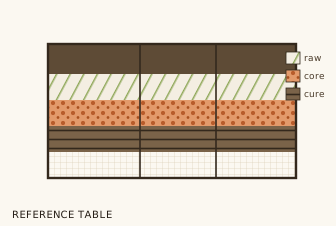
Nothing in the table is built on its own: this is where each class of material ends up once a bin is charged from it.
03How to use this table
- 01 Split your kitchen waste into three containers: raw vegetable, cooked food, and paper.
- 02 Send cooked food, meat, dairy and oils to a sealed bokashi bucket.
- 03 Send raw vegetable and fruit trimmings to the worm tray, chopped to 3 cm.
- 04 Keep a separate stack of cardboard and paper for the heap, and never mix oiled paper in.
- 05 Bury everything: 5 cm in a worm tray, 20-25 cm in a heap core.
- 06 Keep citrus and onion to about 20 % of what a worm tray receives.
- 07 Check teabags and cardboard by hand for plastic before they go into any system.
04The three-way split that makes indoor composting work
Most households that give up on indoor composting do so because they tried to put everything through one system. The workable split is: sealed bucket for cooked food, meat, dairy and oils; worm tray for raw vegetable and fruit material plus paper bedding; heap for everything dry and garden-derived. That split exists because the three systems are killed by different things — worms by oils and salts, buckets by dryness, heaps by compaction.
05Burying is the whole technique
Almost every kitchen-waste problem, from fruit flies to rodents to smell, is a surface problem. Material left on the surface of a heap or a worm tray is exposed to air, insects and animals. Material buried 5 cm down in a worm tray or 20-25 cm down in a heap core is not. This is why the entries in this log record the burial depth as carefully as the weight: it is the difference between a system that works quietly and one that becomes a nuisance within a fortnight.
06Salt, oil and the small exclusions
Three categories should stay out of garden compost entirely: cooking oil in quantity, salted water from cooking, and anything containing a lot of salt or preservative. None of them will destroy a pile, but they are cumulative — a heap that receives a litre of salty pasta water a week will, after a year, have noticeably high sodium and a suppressed microbial community. The same applies to citrus and onion in a worm tray: fine in moderation, harmful in concentration.
07What the numbers do not capture
Two rows in this table are decided by materials rather than chemistry. Teabags: if the bag contains polypropylene it will still be intact in the compost two years later, and the only way to tell is to tear a wet one open. Cardboard and paper: the C:N is excellent, but laminated, waxed or plastic-film-coated stock cannot be composted at all. The chemistry says a material is suitable; only your hands can say whether it is what you think it is.
08Questions this batch raised
- Should I stop putting citrus and onion in my worm bin?
- You can keep them to about a fifth of the weekly feed. The advice to exclude them entirely comes from worm-farming contexts where trays are fed heavily and acidity builds up; at normal household rates, with bedding and eggshell, they cause no measurable harm.
- Is it true that you cannot compost anything cooked?
- No. Cooked food composts perfectly well; the restriction is about animals and smell, not about the composting. In a sealed bokashi bucket cooked food is the ideal input. In an open heap, bury it deeply in the core.
09Faults this batch illustrates
- Fruit flies around the worm traySmall flies in the air around the tray, and maggots in any food that is sitting on the surface.
- Rodents digging in the pile or bedHoles in the side of a heap or in a mulched bed, and food waste visible on the surface.
- Sour or rancid smellA vinegar, silage or rancid-butter smell, usually with a temperature drop of several degrees.